Lens 1 of 6 · Chapter One
Rhetoric
How persuasion builds the thing it appears merely to describe
In plain terms
Rhetoric is the study of how persuasion works — the medium in which an argument becomes shared, rather than decoration added to a finished one. Aristotle defined it as the capacity to see, in any given case, the available means of persuasion — a faculty that can be cultivated, exercised in real situations, always adapted to a particular audience.
What the chapter argues
From the abstract to Chapter One: RhetoricImplementing change successfully requires persuasion. Consistent with the idea of leadership-as-narrative, this chapter gives an account of leadership as something created in the course of persuasive communication instead of something existing prior to or independent of it.
… Rhetoric is sometimes understood as a layer or wrapper added to decorate leadership. From the perspective of leadership-as-narrative, this chapter shows how rhetoric makes leadership into something real and shared.
From the book
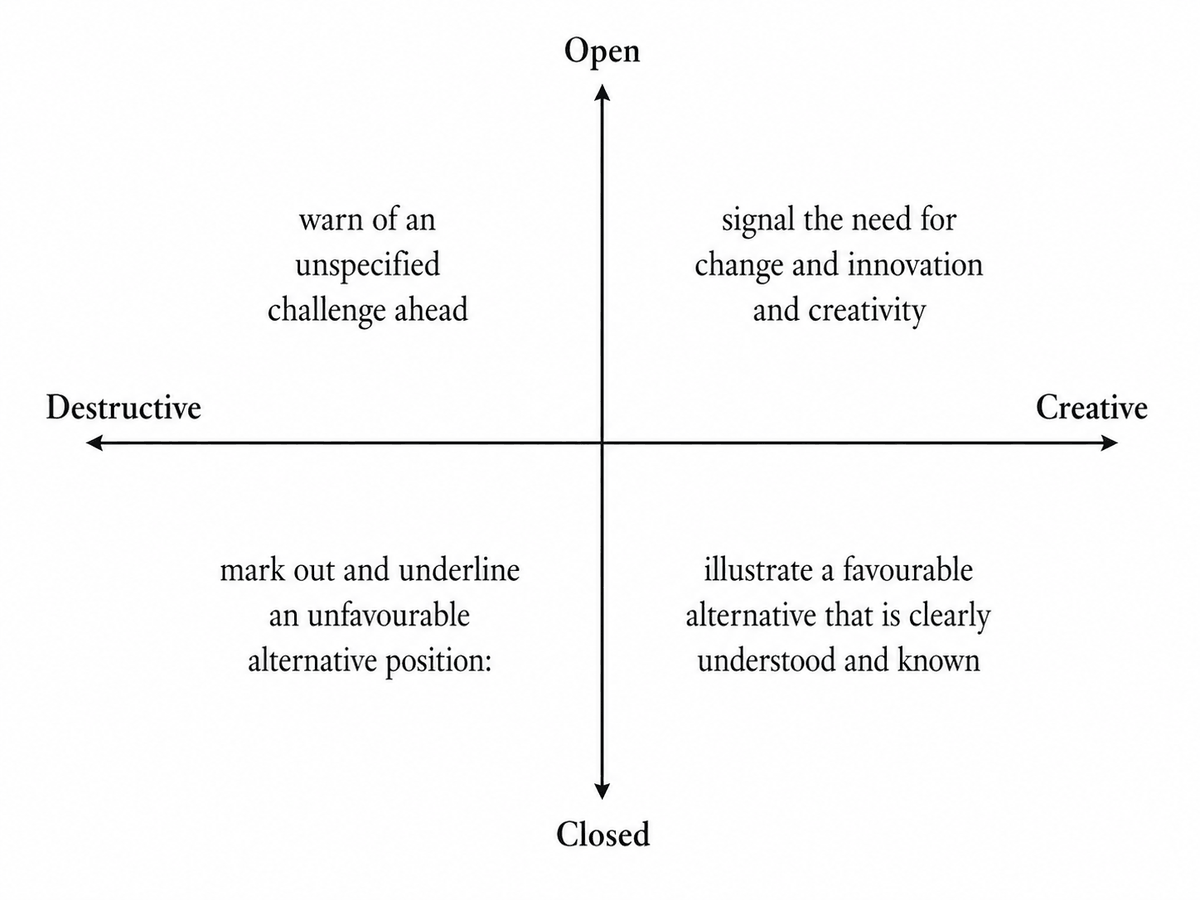
From the chapter itself
From Chapter One: RhetoricAphorisms work partly through compression – they say in a few words what would take a paragraph to argue properly – but also importantly through what they leave out. Every aphorism is an argument with missing premises. And it is the missing premises that give them their peculiar, almost magical, persuasive force.
Related concepts
Terms you will meet in this chapter, kept in the author's vocabulary:
One short example
A question to sit with
Take the last strategy sentence you wrote. What must your audience already believe for it to follow — and would you say that part out loud?
Where to go next
This lens is developed in Chapter One: Rhetoric.
Related tools: Enthymeme Analyser · Critical Narrative Review
Related cases: Steve Jobs and the iPhone launch · The Darzi Review · Evidence-based management
Status: the abstract and the passage above are quoted directly from the manuscript · surrounding text is site-written · author review required